Reliable Computational Modelling
The reliability of any model is measured by the trust decision-makers can invest in the pronouncements of the that model. The Reliable Computational Modelling (RCM) research group aims at developing approaches and methods to objectively assess and subsequently improve the reliability of data-based, physics-based and mixed models.

Research topics
Reliable multiphysical modelling
This applied research area covers the full modelling and simulation cycle including geometry preparation, computational mesh development, boundary and initial condition determination, multiphysics coupling, and visualization, postprocessing and analysis. The applications of our research cover a wide variety of areas, including the built environment, and indoor studies, ground surface and aerial vehicle simulations, and industrial production environments, among others. Some of the current use cases include the use of computational fluid dynamics for cultural heritage preservation, air pollution dispersion simulations and certification of passenger aircraft.

Uncertainty quantification
Uncertainty quantification (UQ) sits at the border of the fundamental and applied research at the RCM group. Fundamental research in UQ covers uncertainty characterization and propagation through complex numerical models, automatic computation verification, generalized uncertainty calculi and programmatic advancements in applying UQ. The topic is widely applicable to all fields in the scope of the RCM group which include design under uncertainty, risk assessment of complex systems, and computer model validation and predictive capability estimation. Current use cases include aircraft certification, UQ for aerodynamic design in an industrial setting, validation of air pollutions dispersion models and machine learning model reliability improvements.

Scientific machine learning
Research on this topic is mostly fundamental and covers reliability of physics-informed machine learning models and deep learning models. The work on the topic is applied in the development of surrogate models, simulation acceleration, and digital twin fusion. The current use cases cover aerospace structural modelling and a variety of urban analysis applications.

Reliable language modelling
This research topic focuses on the development of measures to equip the predictions from question-answering language models with statistical guarantees of validity, with a particular emphasis on critical applications. The fundamental part of the research aims at developing the methods required to make language models auditable, where as the applied research focuses on using popular language model architectures to validate the results. Application include the development of systems for knowledge extraction and synthesis in aircraft certification and for medical applications.

Key applications
Design, manufacture, testing, servicing, and use of systems, subsystems, and components by the manufacturer. Applicable to both manufactured products and production facilities.
- Aviation and Automotive industries
- Autonomous vehicles
- Energy industry (e.g., wind turbines, nuclear and thermal power plants)
- Construction industry (at the level of individual structures—buildings, bridges, towers, etc.).
Business Development and Collaboration team
Our interdisciplinary team includes AI researchers, data scientists, health technology experts, and ethicists.



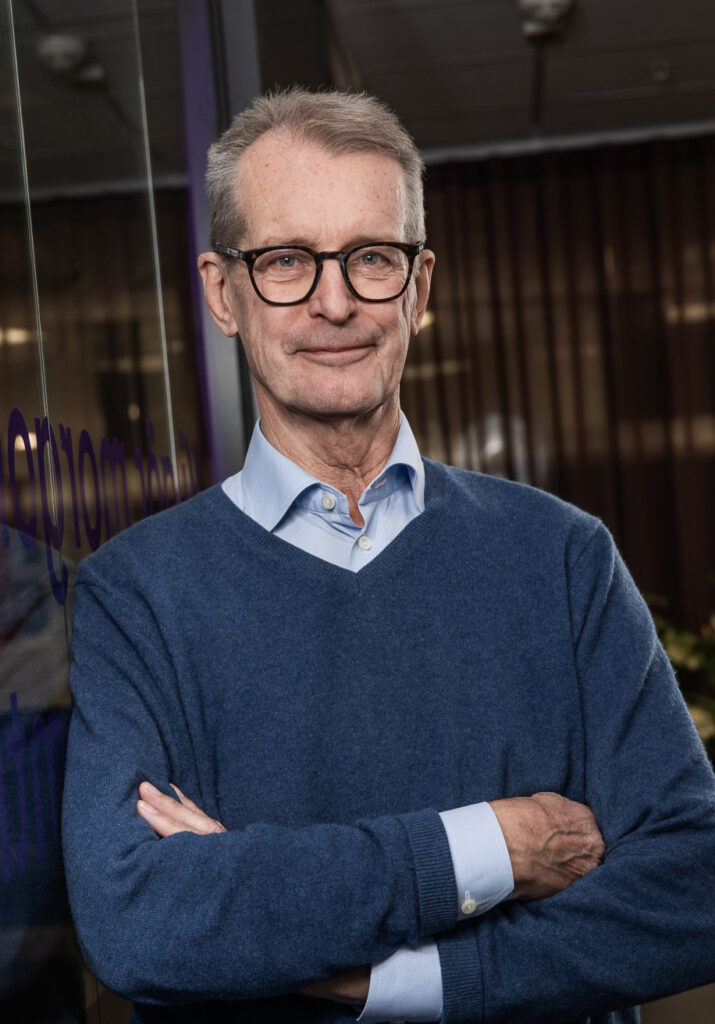

Peter Hristov, PhD, BEng
Join the Data-Sharing Movement
We invite businesses, researchers, and public institutions to connect, learn, and innovate together within our growing ecosystem.